

Marine Education
What Is the Best Time to Go Trout Fishing?
Aug
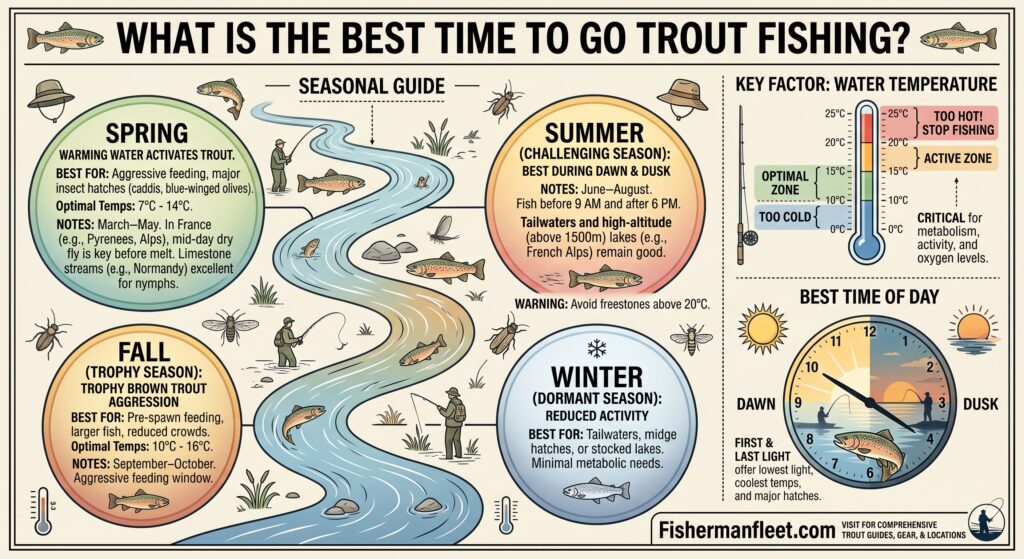
The best time to go trout fishing is generally during the early morning and late afternoon into evening, particularly when water temperatures are cool and trout are actively feeding. However, the best period changes with season, weather, water temperature, insect activity, fishing pressure, and whether you’re fishing a river, stream, pond, or lake.
For rainbow trout specifically, cool water is important. Trout are cold-water fish, so their location and feeding behavior can shift substantially as water warms. Rather than relying only on the clock, successful anglers pay attention to water conditions and look for places that provide suitable temperature, oxygen, food, and cover.
Before heading to the water, explore rods, reels, fishing line, lures, hooks, and other trout equipment at Fisherman Fleet.
Anglers should also check local fishing regulations before each trip. Take Me Fishing provides useful information about fishing licenses, locations, and getting started, while state wildlife agencies remain the primary source for specific licensing and fishing regulations.
Table of Contents
- Best Time to Go Trout Fishing
- When Are Trout Most Active?
- Best Time to Catch Trout During the Day
- Best Time to Catch Rainbow Trout
- Where Do Rainbow Trout Hang Out in Lakes?
- Best Trout Fishing Times by Season
- Weather and Trout Fishing
- Where Do Bass Live?
- Where to Get a Fishing License
- Best Trout Fishing Gear
- Frequently Asked Questions
Best Time to Catch Trout During the Day
If you can choose only one period, early morning is an excellent starting point for trout fishing.
Water temperatures are typically cooler after the night, fishing pressure may be lower, and trout may move into productive feeding areas.
The period around sunrise can therefore provide excellent opportunities.
Early Morning
Early morning can be especially productive during warmer months.
Try fishing:
- Shaded banks
- Stream pools
- Current seams
- Inlets
- Drop-offs
- Weed edges
- Areas near submerged structure
In moving water, pay particular attention to locations where current delivers food without requiring trout to constantly fight the strongest flow.
Late Afternoon and Evening
Late afternoon into evening can create another productive feeding window.
As direct sunlight decreases, some shallow areas become more comfortable for trout. Insect activity can also influence feeding behavior, particularly on rivers and streams.
Middle of the Day
Midday fishing isn’t automatically poor.
During cooler seasons, the middle of the day can actually become productive as conditions warm slightly.
During hot summer weather, however, trout may seek cooler and deeper water or areas influenced by springs and incoming cold water.
This is why the best time to catch trout in the day should be considered alongside season and water temperature.
When Are Trout Most Active?
Anglers asking when are trout most active should focus on feeding opportunities and environmental conditions rather than relying exclusively on a specific hour.
Trout activity is influenced by:
- Water temperature
- Dissolved oxygen
- Light
- Insect hatches
- Current
- Available forage
- Weather
- Fishing pressure
Cool, oxygen-rich water generally provides favorable trout habitat.
Trout can also become particularly active when food becomes abundant. On a stream, an insect hatch can suddenly turn an otherwise quiet fishing period into intense feeding activity.
Therefore, observant anglers watch both the fish and the environment.
Best Time to Catch Rainbow Trout
The best time to catch rainbow trout depends heavily on where you’re fishing.
Rainbow trout can inhabit streams, rivers, lakes, and reservoirs, and their feeding patterns differ between these environments.
Rainbow Trout in Rivers
In moving water, look for:
- Current seams
- Pools
- Riffle transitions
- Undercut banks
- Rocks
- Eddies
- Behind large obstructions
A trout wants access to food without unnecessarily wasting energy.
An area where faster current delivers insects into slightly slower water can therefore become a productive feeding location.
Rainbow Trout in Lakes
Lake fishing requires a different strategy.
During cooler periods, rainbow trout may be accessible relatively close to shore.
As surface water becomes warmer, fish may move deeper in search of more suitable conditions.
Consequently, the best location in April may be completely different from the best location in August.
Where Do Rainbow Trout Hang Out in Lakes?
Understanding where do rainbow trout hang out in lakes can save considerable fishing time.
Instead of casting randomly, search for habitat that combines suitable water conditions with food.
Potential areas include:
- Drop-offs
- Points
- Creek mouths
- Inlets
- Submerged structure
- Weed edges
- Areas containing schools of forage
- Cooler sections of the lake
Rainbow Trout in Water
Finding rainbow trout in water becomes easier when you think vertically as well as horizontally.
In spring, trout may cruise shallow shorelines.
When the lake warms, they can move farther offshore or deeper.
During fall, cooling conditions may once again make shallower areas productive.
This movement means anglers should adjust lure depth rather than repeatedly fishing the same depth throughout the year.
Best Trout Fishing Times by Season
The best time for trout fishing changes dramatically throughout the year.
Spring Trout Fishing
Spring can offer excellent trout fishing in many parts of the United States.
Cool water can keep trout active for longer periods of the day.
Morning fishing can be productive, but midday and afternoon opportunities may also be strong depending on weather and local conditions.
Spring techniques include:
- Inline spinners
- Small spoons
- Artificial flies
- Small crankbaits
- Soft plastics
- Natural bait where legal
Summer Trout Fishing
Summer requires more careful planning.
Early morning frequently becomes the preferred fishing period because water has had the night to cool.
As the sun rises and shallow water heats, trout may move into deeper or cooler habitat.
In some waters, excessively warm temperatures can stress trout. Responsible anglers should pay attention to local guidance and conditions rather than continuing to target stressed fish simply because fishing is legally open.
Fall Trout Fishing
Fall can provide excellent opportunities as water temperatures decline.
Trout may become more active and can sometimes spend more time in accessible feeding areas.
Morning, afternoon, and evening can all produce fish depending on conditions.
Winter Trout Fishing
Winter fishing can be productive where seasons and regulations permit.
Unlike summer, early morning isn’t necessarily the only period to prioritize. A slightly warmer midday period can sometimes improve trout activity.
Always check access, ice conditions, seasons, and local regulations before winter fishing.
Does Weather Affect the Best Time to Catch Trout?
Yes.
Weather can significantly influence trout behavior.
Cloudy Conditions
Overcast skies reduce direct sunlight and can encourage trout to feed more confidently in relatively shallow areas.
Light Rain
Light rain may create favorable fishing conditions, particularly when it stimulates food activity or slightly changes water conditions.
However, rapidly rising water, storms, flooding, and dangerous currents are different situations. Personal safety should always take priority.
Bright Sunny Days
Bright sunlight can make trout more cautious, particularly in clear and shallow water.
Try deeper areas, shaded banks, submerged structure, or low-light periods.
After a Cold Front
A rapid weather change can temporarily alter fish behavior. Slow presentations and experimentation with lure depth may become important.
Where Do Bass Live?
Although this guide focuses on trout, anglers frequently search where do bass live or where do bass fish live while researching freshwater fishing.
Largemouth bass prefer warmer conditions than trout and frequently relate to cover.
Look for bass around:
- Aquatic vegetation
- Fallen trees
- Docks
- Brush
- Rocks
- Points
- Creek channels
- Drop-offs
- Shaded banks
Bass and trout can sometimes inhabit the same larger waterbody, but they often use different sections because of differences in preferred habitat and temperature.
Knowing your target species before selecting a fishing location can dramatically improve efficiency.
Who Sells Fishing Licenses Near Me?
Before going trout fishing, make sure you have the fishing license required by the state where you’re fishing.
People commonly search:
Who sells fishing license near me?
Places to get fishing license near me
Who sale fishing license near me?
The answer depends on your state.
Fishing licenses are typically available from the state’s official fish and wildlife agency and may also be sold by authorized retailers.
Potential authorized sellers can include sporting-goods stores, bait-and-tackle shops, and other approved license agents.
However, availability differs by state.
Buy Fishing Licence Online
For many anglers, the easiest option is to buy a fishing licence online through the official wildlife agency for the state where they intend to fish.
Take Me Fishing’s fishing license resources can help anglers identify the appropriate licensing information for their state.
When possible, purchase through an official state system instead of clicking an unfamiliar advertisement or unofficial licensing website.
Why Fishing Licenses Matter
Fishing-license requirements aren’t simply administrative obstacles.
License revenue helps state agencies manage fisheries and recreational fishing opportunities.
Programs supported by fishing-related revenue can include fisheries research, stocking, habitat improvement, public access, education, conservation, and resource management.
Licensing requirements vary substantially among states.
Age exemptions can also differ. A child who fishes without a license in one state may require different documentation or privileges when fishing somewhere else.
Always check the official rules for the exact state and waterbody you’re visiting.
Choosing the Best Trout Fishing Gear
Trout fishing doesn’t usually require extremely heavy equipment.
A balanced light or ultralight setup can provide excellent casting performance and make smaller trout enjoyable to fight.
Trout Fishing Rod
Light and ultralight spinning rods are popular choices.
A sensitive rod helps anglers detect subtle bites while providing enough flexibility to protect lighter fishing line.
Trout Fishing Reel
Pair the rod with an appropriately sized spinning reel.
Smaller reels are often sufficient for stream and pond trout, while somewhat larger setups may be useful for bigger lakes and larger fish.
Fishing Line
Common choices include monofilament, fluorocarbon, and braided line paired with an appropriate leader.
Water clarity, lure type, fish size, and fishing environment should influence your selection.
Best Lures for Rainbow Trout
A good trout tackle box doesn’t need hundreds of lures.
Several versatile options can cover many conditions.
Inline Spinners
Inline spinners combine vibration and flash and are easy to retrieve through streams, ponds, and lakes.
Small Spoons
Spoons imitate small baitfish and can be particularly useful when anglers need additional casting distance.
Small Crankbaits
Small minnow-style plugs can imitate forage and work well when trout are actively chasing prey.
Artificial Flies
Flies can imitate insects and other natural trout foods.
Soft Plastics
Small worms, grubs, and other soft plastics provide additional options when trout prefer a slower presentation.
Natural bait can also be productive where local regulations permit its use.
Match Your Lure to the Conditions
The lure itself is only part of the equation.
Consider:
- Water clarity
- Depth
- Current
- Trout location
- Available forage
- Light conditions
- Season
In clear water, natural-looking presentations can be effective.
In stained conditions, additional vibration, contrast, or flash can help trout locate a lure.
Experiment with retrieval speed as well. Trout may aggressively chase a fast-moving spinner one day and prefer a slowly presented bait the next.
Build Your Trout Fishing Setup
Once you’ve determined the best time to catch trout, make sure your equipment is ready.
A practical trout setup can include:
- Light or ultralight rod
- Spinning reel
- Fishing line
- Leader material
- Small hooks
- Inline spinners
- Spoons
- Small crankbaits
- Soft plastics
- Fishing pliers
- Landing net
- Tackle box
- Appropriate fishing license
You can explore fishing rods, reels, tackle, lures, line, and accessories through Fisherman Fleet fishing gear when preparing for freshwater adventures across the United States.
Frequently Asked Questions
What is the best time to go trout fishing?
Early morning and late afternoon through evening are excellent starting periods, especially during warmer weather. Season, water temperature, weather, and food availability can be more important than the exact hour.
What is the best time to catch trout in the day?
During warmer months, concentrate on early morning and evening. During cooler seasons, midday can also be productive.
When are trout most active?
Trout tend to become particularly active when water conditions are suitable and food is abundant. Insect activity, weather, light, current, and water temperature can all affect feeding.
What is the best time to catch rainbow trout?
Morning and evening can be productive, but rainbow trout may feed throughout the day when water conditions remain favorable.
Where do rainbow trout hang out in lakes?
Look around drop-offs, points, creek mouths, inlets, weed edges, submerged structure, and depths offering suitable temperature, oxygen, and forage.
Are trout easier to catch when it’s cloudy?
Cloud cover can reduce bright light and may encourage trout to feed more confidently in shallower areas, although results depend on other environmental conditions.
Can you catch trout in the middle of the day?
Yes. Midday can be productive, particularly during cooler seasons or when trout remain in suitable deeper water.
Who sells fishing licenses near me?
Authorized sellers vary by state and can include tackle shops, sporting-goods stores, and other approved agents. Your state’s official wildlife agency should provide the most reliable current list.
Can I buy a fishing license online?
In many U.S. states, yes. Use the official licensing website of the state wildlife agency where you intend to fish.
Where do bass live?
Bass commonly use vegetation, docks, submerged timber, rocks, points, drop-offs, and other areas offering food and cover.
Conclusion
The best time to go trout fishing is usually during periods when trout have access to cool, suitable water and are actively feeding. Early morning and late afternoon into evening are excellent starting points, especially in warmer conditions, but there is no single hour that guarantees success.
Season matters too. Spring can provide productive fishing across a wider portion of the day, summer often rewards early starts, fall brings cooling water and renewed opportunities, while winter can make midday fishing surprisingly productive.
Understanding where rainbow trout hang out in lakes, watching water and weather conditions, selecting the right lure, and experimenting with depth can ultimately be more valuable than watching the clock.
Before your trip, obtain the appropriate fishing license through your state’s official system and review current regulations. Then visit Fisherman Fleet for fishing tackle and accessories that can help you prepare for your next freshwater adventure.
