
Marine Education
Walleye Baits and Lures: Complete USA Fishing Guide
Sep
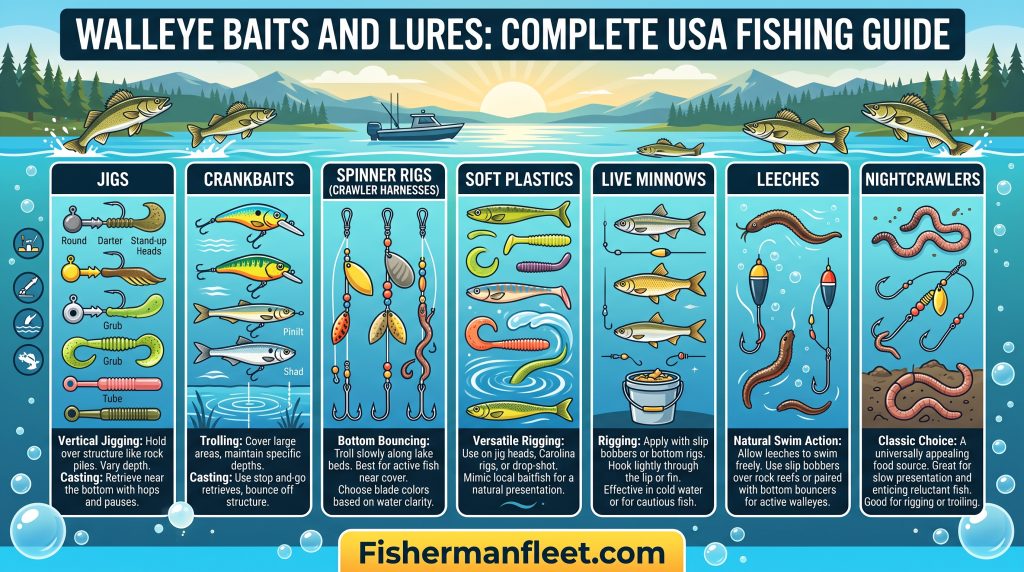
Choosing the right walleye baits and lures can make a major difference when targeting these popular freshwater predators. Walleye primarily feed on other fish as they grow, which is why minnows, baitfish-style crankbaits, jigs, soft plastics, spinner rigs, and trolling lures are among the most useful presentations for anglers across the United States.
The U.S. Fish and Wildlife Service walleye profile explains that young walleye eat small insects before shifting toward prey such as leeches, snails, frogs, crayfish, and especially other fish as they become larger.
That natural diet gives anglers an important clue: successful walleye fishing bait and artificial lures often imitate the size, movement, profile, or vibration of natural prey.
Anglers can explore fishing rods, reels, jigs, crankbaits, line, terminal tackle, and other freshwater equipment at Fisherman Fleet.
Table of Contents
- What Bait to Use for Walleye
- Best Walleye Baits
- Best Walleye Lures
- Top 10 Walleye Lures
- Walleye Jigging Lures
- Crankbaits for Walleye
- Spinner Rigs and Harnesses
- Summer Walleye Lures
- Best Tackle for Walleye
- How to Choose Walleye Lures by Water Conditions
- Frequently Asked Questions
- Conclusion
What Bait to Use for Walleye
If you’re asking what bait to use for walleye, three traditional choices stand out:
- Minnows
- Nightcrawlers
- Leeches
The Wisconsin Department of Natural Resources walleye guide notes that walleye are primarily minnow feeders while also identifying leeches, small bullheads, nightcrawlers, and small plugs as popular baits.
Which bait performs best can depend on season, water temperature, forage availability, current, fish depth, and local fishing pressure.
Minnows
Minnows are one of the most dependable forms of walleye bait because adult walleye naturally feed heavily on other fish.
Minnows can be presented using:
- Jig heads
- Slip floats
- Live-bait rigs
- Bottom rigs
- Drifting presentations
They are particularly useful when walleye are feeding actively on small forage fish.
Nightcrawlers
Nightcrawlers are extremely versatile.
They can be used on:
- Spinner harnesses
- Bottom bouncers
- Live-bait rigs
- Jigs
Crawler harnesses can be especially productive when anglers need to cover water slowly.
Leeches
Leeches provide natural movement and can be excellent around rocks, weed edges, humps, and other summer structure.
They can be presented below slip floats or with live-bait rigs.
Best Walleye Baits
The best walleye baits usually imitate food that already exists in the water.
A practical selection includes:
1. Minnows
Excellent all-around bait for spring, fall, river, lake, and reservoir fishing.
2. Nightcrawlers
Especially useful in warmer water and with spinner rigs.
3. Leeches
Effective around summer structure and deeper water.
4. Soft-Plastic Minnows
Useful when live bait is unavailable or when anglers want a more durable presentation.
5. Paddletail Swimbaits
Produce both movement and vibration and can be paired with jig heads.
The U.S. Fish and Wildlife Service also identifies minnows as a favorite walleye bait in its expert fishing tips, while noting that trolling, drifting, and still fishing can all be productive approaches.
Walleye Fishing Bait by Season
Seasonal changes influence where walleye hold and what presentations are practical.
Early Spring
Consider:
- Minnows
- Jig-and-minnow combinations
- Small soft plastics
- Blade baits
Walleye often concentrate around spawning routes and shallow rocky areas.
Late Spring
Try:
- Jigs
- Minnows
- Crankbaits
- Soft-plastic baitfish
- Leeches
Summer
Consider:
- Nightcrawler harnesses
- Leeches
- Deep-diving crankbaits
- Soft plastics
- Trolling presentations
Fall
Minnows and baitfish-style artificial lures can become particularly useful again as water temperatures decline.
Best Walleye Lures
The best walleye lures are not necessarily the most expensive or complicated.
Versatile lure categories include:
- Jigs
- Crankbaits
- Minnow plugs
- Spinner rigs
- Blade baits
- Soft-plastic swimbaits
- Spoons
The right lure should reach the depth where fish are holding and create an action appropriate for the conditions.
A lure running several feet above or below active fish can be far less effective than a simple jig placed directly in the feeding zone.
Top 10 Walleye Lures
For anglers building a tackle box, these ten lure categories provide a strong starting point.
1. Jig and Minnow
Few walleye combinations are more traditional.
A simple jig head paired with a live minnow allows anglers to:
- Cast
- Drift
- Vertically jig
- Work rivers
- Fish lake structure
2. Soft-Plastic Minnow
Soft plastics offer a reusable alternative to live bait.
Minnow-style plastics can imitate shad, shiners, and other forage.
3. Paddletail Swimbait
Paddletails produce a swimming action that can attract actively feeding walleye.
4. Deep-Diving Crankbait
A deep-diving crankbait helps reach fish holding farther down in the water column.
5. Shallow Minnow Plug
Useful when walleye move shallow during low-light periods.
6. Blade Bait
Blade baits create substantial vibration and can be effective in colder water.
7. Spinner Harness
Spinner harnesses combine flash, vibration, and natural bait.
8. Jigging Spoon
A jigging spoon can be vertically worked around deeper structure.
9. Lipless Crankbait
These lures produce vibration and can be useful for searching open water or flats.
10. Hair Jig
Hair jigs offer subtle movement and can be especially useful when fish prefer slower presentations.
These categories represent a practical top 10 walleye lures list rather than a claim that one specific commercial lure will always outperform another.
Walleye Jigging Lures
Walleye jigging lures are among the most important items an angler can carry.
Jigging works because it lets anglers maintain close contact with:
- Bottom
- Rock piles
- Drop-offs
- Current seams
- Submerged points
- Humps
The Take Me Fishing walleye guide describes jigging as one of the most popular and versatile methods for experienced walleye anglers. It provides examples including smaller jigs for 2–3 inch bait profiles and larger jigs for 3–5 inch presentations.
Common jigging options include:
- Round-head jig
- Hair jig
- Blade bait
- Jigging spoon
- Jig-and-minnow
- Jig-and-plastic combination
Choosing Jig Weight
Jig weight should depend on:
- Depth
- Current
- Wind
- Line diameter
- Bait size
The goal is generally to use enough weight to maintain contact with the target zone without making the presentation unnecessarily heavy.
Shallow, calm water may allow a lighter jig.
Deep water, river current, or strong wind can require more weight.
Crankbaits as Walleye Fishing Lures
Crankbaits are among the most popular walleye fishing lures because they allow anglers to cover water efficiently.
Take Me Fishing identifies crankbaits as versatile freshwater lures suitable for species including walleye, bass, trout, and pike.
Crankbaits can be:
- Cast
- Trolled
- Retrieved steadily
- Paused
- Worked along structure
For walleye, focus heavily on running depth.
A deep-diving crankbait is useful only when fish are actually holding within or near its effective depth range.
Popular Walleye Lures for Trolling
Trolling helps anglers cover large areas and locate scattered fish.
Popular options include:
Minnow-Style Crankbaits
These imitate common forage species.
Deep-Diving Crankbaits
Useful when summer or daytime fish hold deeper.
Spinner Harnesses
Can be paired with nightcrawlers or other bait.
Jointed Plugs
Produce additional movement that can attract aggressive fish.
Small Spoons
Can work in open-water situations depending on local forage.
The best trolling setup varies with depth, speed, water clarity, and baitfish location.
Good Fishing Lures for Walleye
Good fishing lures for walleye should help anglers accomplish at least one important objective:
- Reach the correct depth
- Resemble natural forage
- Produce vibration
- Create flash
- Maintain contact with structure
- Cover water efficiently
That means a basic jig can sometimes outperform a highly detailed crankbait.
Presentation is often more important than appearance.
Great Walleye Lures for Low-Light Fishing
Walleye are well suited to hunting in dim or turbid conditions.
The U.S. Fish and Wildlife Service notes that walleye are successful hunters in murky water because of their strong vision, which is one reason windy conditions can sometimes improve fishing.
During dawn, dusk, overcast conditions, or night fishing, consider:
- Minnow plugs
- Crankbaits
- Jigs
- Swimbaits
- Spinner rigs
Shallow water can become particularly worth investigating when fish move from deeper daytime habitat toward feeding areas.
Good Walleye Bait for Rivers
River walleye often hold around areas where current delivers prey.
Good choices include:
- Jig and minnow
- Soft-plastic minnow
- Paddletail
- Crankbait
- Blade bait
Look around:
- Current seams
- Eddies
- Bridge pilings
- Wing dams
- Deep holes
- Rock transitions
- Dam tailwaters
A jig is especially useful because it allows anglers to maintain contact with the bottom while moving naturally through current.
Summer Walleye Lures
Summer walleye lures should usually be selected around depth and fish location.
As surface temperatures increase, some walleye populations use:
- Deeper structure
- Offshore humps
- Points
- Drop-offs
- Weed edges
- Open-water baitfish schools
Useful summer presentations include:
Deep-Diving Crankbaits
Good for trolling deeper water.
Crawler Harnesses
Excellent for covering flats, points, and gradual breaks.
Jigging Spoons
Useful for vertically fishing deeper schools.
Paddletail Swimbaits
Can imitate roaming baitfish.
Live-Bait Rigs
Nightcrawlers and leeches remain useful when fish prefer natural presentations.
Best Fishing Lures for Walleye in Clear Water
Clear water can make lure presentation more important.
Walleye frequently hold deeper during daylight in clear lakes.
The Wisconsin DNR notes that walleye in clear water commonly remain deeper during the day and move shallower at night.
In clear water, consider:
- Natural baitfish colors
- Smaller jigs
- Minnow-style plastics
- Subtle crankbaits
- Live bait
Longer casts and careful boat positioning can also reduce unnecessary disturbance.
Best Walleye Lures for Stained Water
Stained or turbid water can favor presentations with additional vibration or visibility.
Useful choices may include:
- Spinner rigs
- Crankbaits
- Blade baits
- Paddletails
- Bright jig heads
Walleye’s ability to feed effectively under reduced visibility gives them an advantage in these conditions.
This is part of the reason anglers often refer to windy, churned water as the walleye chop. The U.S. Fish and Wildlife Service specifically discusses this phenomenon in its walleye species information.
Best Tackle for Walleye
The best tackle for walleye depends on the fishing technique, but a versatile spinning setup can handle many common methods.
Rod
A medium-light or medium spinning rod works for many walleye techniques.
Reel
A 2000–3000 size spinning reel is a practical range for many anglers.
Line
Braid, monofilament, and fluorocarbon can all have roles.
Braid provides low stretch and sensitivity.
Monofilament provides additional stretch.
Fluorocarbon is frequently used as leader material.
Terminal Tackle
A practical walleye tackle box might contain:
- Jig heads
- Swivels
- Snaps
- Leaders
- Hooks
- Sinkers
- Bottom bouncers
- Spinner blades
- Beads
Lures
Carry several depth ranges rather than dozens of nearly identical lures.
For additional rods, reels, line, terminal tackle, and artificial lures, explore Fisherman Fleet.
How to Choose Walleye Lure Color
Color gets a lot of attention, but anglers should prioritize:
- Location
- Depth
- Speed
- Presentation
- Lure profile
- Color
In clear water, natural patterns may provide a realistic appearance.
In stained water, higher-contrast or brighter presentations may be easier for fish to detect.
However, there is no universal best color for every lake.
Experiment and let the fish determine the productive pattern.
What to Use to Catch Walleye at Night
Night fishing can be particularly productive because walleye often move into shallower feeding areas after dark.
Potential nighttime choices include:
- Minnow plugs
- Shallow crankbaits
- Jigs
- Live minnows
- Swimbaits
The Wisconsin DNR notes that walleye in clear waters often stay deeper during daytime and move toward shallower areas at night.
Rocky bars, points, weed edges, and shallow flats can therefore become worth exploring after sunset.
Matching Walleye Bait to Natural Forage
The most consistent principle in lure selection is to understand what walleye are naturally eating.
According to the U.S. Fish and Wildlife Service, larger walleye primarily consume other fish.
Common prey can differ from lake to lake.
Depending on the ecosystem, walleye may feed on:
- Shad
- Shiners
- Perch
- Minnows
- Ciscoes
- Other small fish
A lure does not need to duplicate the exact prey perfectly.
Matching approximate:
- Length
- Profile
- Depth
- Movement
can provide a useful starting point.
Frequently Asked Questions
What are the best walleye baits and lures?
Minnows, nightcrawlers, leeches, jigs, soft-plastic minnows, crankbaits, spinner harnesses, blade baits, and jigging spoons are among the most versatile choices.
What bait should I use for walleye?
Minnows are an excellent general-purpose choice. The Wisconsin Department of Natural Resources also lists leeches and nightcrawlers among favorite walleye baits.
What are the best walleye lures?
Jigs and crankbaits are two of the most versatile categories because they can cover different depths and fishing situations.
What is good walleye bait in summer?
Nightcrawlers, leeches, minnows, and soft-plastic baitfish can all be useful depending on depth and feeding activity.
What are good fishing lures for walleye?
Jigs, minnow-style crankbaits, paddletails, spinner rigs, blade baits, and jigging spoons are useful choices.
What are the top lures for walleye?
A strong tackle selection includes jigs, minnow plugs, deep-diving crankbaits, paddletails, spinner harnesses, blade baits, jigging spoons, lipless crankbaits, hair jigs, and shallow-running plugs.
What are the best walleye jigging lures?
Round-head jigs paired with minnows or plastics, hair jigs, blade baits, and jigging spoons can all be effective.
What are popular walleye lures for trolling?
Minnow crankbaits, deep-diving crankbaits, spinner harnesses, and crawler rigs are common trolling choices.
What are good summer walleye lures?
Deep-diving crankbaits, crawler harnesses, jigging spoons, paddletails, and live-bait rigs can be especially useful when summer fish move deeper.
What is the best tackle for walleye?
A medium-light or medium spinning rod, 2000–3000 size reel, appropriate fishing line, jig heads, hooks, leaders, sinkers, crankbaits, and soft plastics provide a versatile starting setup.
Do walleye eat mostly fish?
Adult walleye primarily eat other fish, according to the U.S. Fish and Wildlife Service.
Conclusion
Selecting effective walleye baits and lures begins with understanding what these freshwater predators naturally eat and where they are feeding.
Adult walleye primarily feed on fish, while their broader diet can include leeches, crayfish, frogs, snails, and other prey. The U.S. Fish and Wildlife Service provides a useful overview of walleye diet, habitat, and behavior across North America.
For anglers wondering what bait to use for walleye, minnows remain one of the strongest all-around choices. The Wisconsin DNR also identifies leeches, nightcrawlers, and small plugs as popular walleye presentations.
Artificial lures greatly expand the possibilities. Jigs offer exceptional depth control, crankbaits cover water efficiently, spinner harnesses combine vibration and natural bait, and soft plastics can imitate common forage without relying on live bait.
Season also matters. During spring, jigs and minnows can be excellent. During summer, crawler harnesses, deep-diving crankbaits, jigging spoons, and deeper presentations become useful. During fall, baitfish-style presentations can become productive as walleye respond to cooling water and seasonal forage movements.
Instead of searching for one magical lure, build a compact walleye tackle selection that lets you adjust depth, speed, profile, and presentation.
For walleye rods, reels, jigs, crankbaits, fishing line, terminal tackle, tackle boxes, and other freshwater fishing equipment, explore Fisherman Fleet.
